


Harvesting Fall Herbs: Preserving Sage, Thyme, and Lavender for Autumn Teas and Salves
- Crystal Lbussey-dutton

- 8 minutes ago
- 4 min read
Fall is the perfect time to gather herbs from your garden or local market. The crisp air and golden leaves invite us to slow down and enjoy the season’s gifts. Sage, thyme, and lavender are some of the best herbs to harvest in autumn. They bring warmth and comfort to teas and homemade salves. I’m excited to share how you can harvest and preserve these herbs to enjoy their flavors and benefits all season long!

Fresh sage leaves ready for harvesting in autumn
Why Harvest Herbs in Fall?
Fall herbs have a unique flavor and potency. As the growing season winds down, many herbs concentrate their oils and nutrients. This means your sage, thyme, and lavender will be more fragrant and flavorful. Plus, harvesting in fall helps prepare your garden for winter and keeps your kitchen stocked with natural remedies and delicious teas.
Harvesting herbs now also gives you a chance to preserve them. Drying or making salves locks in their goodness for months. Imagine sipping a warm cup of thyme tea on a chilly evening or soothing your skin with a lavender salve after a long day. It’s a wonderful way to connect with nature and care for yourself.
How to Harvest Sage, Thyme, and Lavender
Each herb has its own best practices for harvesting. Here’s how I do it to get the best results:
Sage
Pick sage leaves in the morning after the dew dries but before the sun gets too hot. This keeps the oils strong.
Choose healthy, vibrant leaves. Avoid any that look yellow or damaged.
Use sharp scissors or garden shears to snip stems about 6 inches long.
Don’t cut more than one-third of the plant at a time to keep it healthy.
Thyme
Harvest thyme just before it flowers for the best flavor.
Snip off the top 5-6 inches of the stems.
Gather several stems together to dry or use fresh.
Lavender
Cut lavender stems when the flowers are just starting to open.
Use sharp scissors to cut 8-10 inch stems.
Harvest in the morning for the best scent.
Preserving Your Herbs for Autumn Use
Once you’ve harvested your herbs, it’s time to preserve them. Drying is the most common method, but you can also make infused oils or salves. Here’s how I preserve each herb:
Drying
Tie small bundles of sage, thyme, or lavender with string.
Hang them upside down in a warm, dry, and dark place with good air circulation.
After 1-2 weeks, the herbs should be dry and crumbly.
Strip the leaves or flowers from the stems and store in airtight containers.
Making Salves
Salves are soothing balms made by infusing herbs in oil and mixing with beeswax. They’re great for dry skin or minor irritations.
Infuse dried herbs in a carrier oil like olive or almond oil by gently heating them together.
Strain the herbs out and melt beeswax into the infused oil.
Pour into small jars and let cool.
Brewing Teas
Dried sage, thyme, and lavender make wonderful teas. Use about one teaspoon of dried herb per cup of hot water. Steep for 5-10 minutes and enjoy!
Using Quality Products to Enhance Your Herb Harvest
To get the most from your herbs, using quality tools and supplies makes a big difference. For example, I love using the Herbal Drying Rack from Crystal's Garden and Gifts. It’s perfect for hanging bundles of sage, thyme, and lavender. The rack keeps herbs organized and allows air to circulate freely, speeding up drying time.
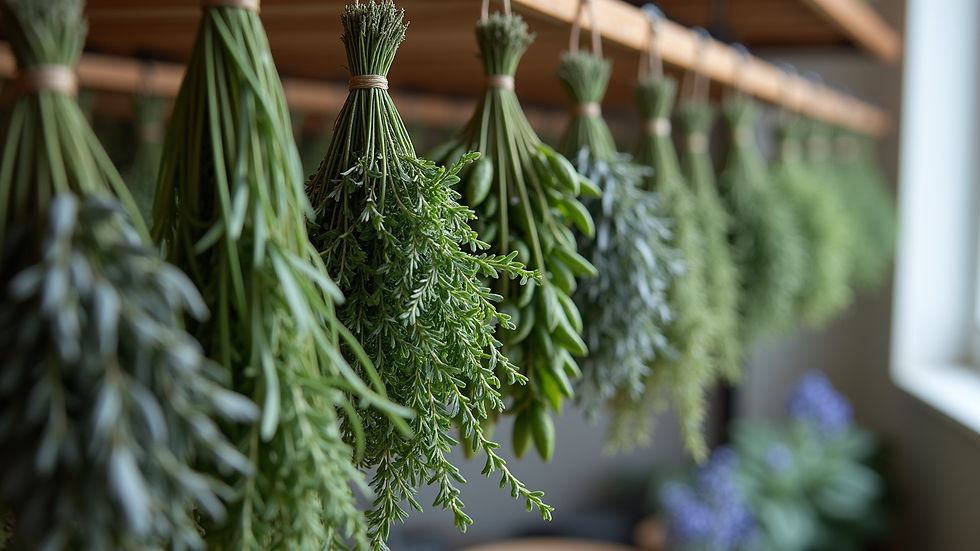
Herbal drying rack with hanging bundles of sage, thyme, and lavender
Another great product is the Handcrafted Beeswax Salve Kit. It comes with everything you need to make your own salves at home. The kit includes pure beeswax, carrier oils, and reusable containers. It’s a fun way to turn your fall herbs into natural skincare gifts!
Tips for Storing and Using Your Preserved Herbs
Proper storage keeps your herbs fresh and potent. Here are some tips I follow:
Store dried herbs in glass jars with tight lids.
Keep jars in a cool, dark place away from sunlight.
Label jars with the herb name and date.
Use dried herbs within 6-12 months for best flavor.
When using your herbs, try mixing sage and thyme in teas for a cozy, earthy flavor. Lavender adds a lovely floral note to both teas and salves. You can also experiment with combining these herbs in homemade bath salts or infused oils.
Bringing Fall Herbs Into Your Daily Routine
Harvesting and preserving herbs is more than a hobby. It’s a way to slow down and enjoy the season’s gifts. I love starting my mornings with a cup of sage and thyme tea. It warms me up and feels like a little ritual of self-care.
In the evenings, I apply lavender salve to my hands and wrists. The scent helps me relax and unwind. These simple practices connect me to nature and remind me to appreciate the small joys of fall.

Lavender salve in a small jar with dried lavender flowers
If you want to try these recipes yourself, check out the Herbal Drying Rack and Beeswax Salve Kit from Crystal's Garden and Gifts. They make harvesting and preserving herbs easy and enjoyable!
Fall herbs like sage, thyme, and lavender are treasures of the season. Harvesting and preserving them lets you enjoy their flavors and benefits long after the leaves have fallen. So grab your scissors, gather your herbs, and start creating your own autumn teas and salves today! Your senses and skin will thank you.


Comments